Tuesday, July 21, 2009

Dolmabahce Palace, Chora Museum, Pierre Loti Cafe


We visited magnificent Dolmabahce ("stuffed garden") Palace on the Bosphorus this morning that Ataturk decreed to be turned into a museum. It is estimated that the amount of gold used in the inner ornamentaion of the palace equals three tons. The glorius Muayede Lounge with its gilded ceiling, five-ton crystal chandelier, and largest one-piece carpet in the world remains as impressive today as it was when it was used to welcome important guests to Turkey.

Lunch was in a fundamentalist area of the city at a restaurant called Kiztasi. For dessert, we enjoyed helva, a new taste experience for most of our group.

A visit to Chora ("countryside") museum followed lunch. Its magnificent mosaics and frescoes date from the 14th century.

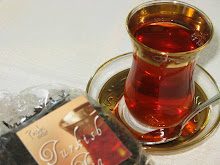
For a view of the Golden Horn, we stopped at Pierre Loti Cafe for cay. The views were spectacular, and the breeze invigorating. A family celebrated the impending circumsion of their son, a boy dressed in princely clothing.

Monday, July 20, 2009

Spice Market, Bosphorus, Grand Bazaar


Always fresh and juicy, fruit is served for dessert. At Refik Restaurant we were introduced to tasty horse mackerel, tiny Bosphorus fish, most likely caught at the Galata Bridge.

We sampled decadent Turkish viagra, dried figs stuffed with walnuts, at the spice market. Spices abound. Wendy did not purchase those colorful boots; rather, she indulged in saffron.

Along the Bosphorus the perspective is entirely different from Istiklal Street. We cruised by Dolmabache ("stuffed garden") Palace that we will tour today, Tuesday. We saw glorious yali, vacation estates directly on the water, many having undergone reconstruction.

Finally, during about an hour of shopping in the Grand Bazaar, we tried to make up our minds about items to purchase. Jim "Pasha" Uhrig found his Hittite wine decanter in Pirlanta, an upscale ceramic shop. In Ottantic, I selected kilim (carpet) bags as gifts to take back to the US and paid fair prices thanks to help from Jim who also decided to buy a kilim bag as a gift. The more one buys, the better the bargaining power. Jim Pasha proved to be an expert at bargaining.

Sunday, July 19, 2009

Blue Mosque, Ayasofya, Basilica Cistern


1. Blue Mosque
2. Sultan's tugra in German Fountain
3. Blue Mosque interior dome
4. Blue Iznik tiles that give Blue Mosque its name
5. Prayer area for Muslim women
6. Young Muslim boy dressed in white circumcision attire
7. Magnificent early 12th-c. mosaic of the Deesis in Ayasofya
8. Ayasofya
9. Ayasofya interior
10. Linda and Susan D inside Ayasofya
11. Basilica Cistern
12. Medusa head used upside down in cistern as support for pillar

In Istanbul for the First Full Day


Arising without an alarm from a refreshing night's sleep provides a rush of freedom and energy that I have somehow lost over the past several weeks. Each day has been packed with new experiences for us Fulbrighters, but there has been precious little down time to reflect and relax, at least from my perspective.

After a late and leisurely Turkish breakfast at the hotel with Julie V, Martha, and Sarah from our group, I sauntered along like the other pedestrians out on Istiklal Street under the scorching morning sun. Service vehicles are allowed on Istiklal until 10 in the morning. After that time, only the red streetcar and pedestrians can use Istiklal.

Summer days are long and hot in Turkey. Air conditioning is never set lower than 17 Celsius in any of the hotels in which we've stayed. In fact, it's often more comfortable outdoors under the shade of a tree than inside. I've read that Turkish people feel that breezes are as bad as ghosts and that they can make one ill. Even on extremely hot days, the locals can be seen eating picnic lunches out under the trees. Most restaurants serve patrons at outdoor tables, even in the city. Occasionally, we've noticed ceiling fans, but they have not always been in use. In extreme heat such as this in America, we are accustomed to ice-box air conditioning!

I spent a few moments in a British bookstore just down from the Hotel Richmond where I spied a gorgeous hardback book on ebru to the tune of 90,00 TL. Converted to our currency, that's a little more than sixty dollars. I decided to wait until the class we're asking for on Saturday morning actualy materializes. If it does, I will probably purchase this book by the living ebru master, Hikmet Barutcugil. After my initial experience in Ankara at Olgunlasma Enstitusu, I have craved additional ebru instruction. This traditional Turkish art will be part of the curriculum I am required to write in return for the Fulbright experience.

Walking the other way down Istiklal, I spotted the ubiquitous Starbucks and ordered a sinful Frappucino. I rationalized it by telling myself that there will be no time for lunch today with the Fulbright tour beginning promptly at 1 o'clock.

In the English edition of Hurriyet, a Turkish newspaper, I read several interesting articles while I sipped and slurped. Thank goodness the smoking ban in public places begins today in Turkey. Smoke has been so thick in some places that I could have cut it with a knife! Smoking, according to the news article, is even prohibited in outdoor gardens with three walls and umbrellas and/or canvas awnings. Fines for violaters will be issued beginning at 69TL.

Another article addressed unlicensed venues being shut down in this trendy area of Beyoglu. For example, businesses exceeding the limit on tables and chairs at ground level or extending into the pedestrian walkways have received warnings. If they decided not to comply or opened other seating areas on terraces (perhaps above street level) without permits, they were forced to close. Emergency services and firefighters must have access to buildings, but obviously experience difficulties with access due to all the cafe tables in the streets and alleyways. Saturday evening was a case in point in that we barely had room to walk single file through the cafes situated along side streets. One waiter with a big smile on his face saw my camera and stepped in front of me. "Lady, you take my picture cheap, please!"

Finally, Istanbul has captured the title of 2010 European Capital of Culture. In less than six months, Istanbul will have the world stage. It is in the process of increasing awareness of cultural and arts activities geared towards tourism. Ayasofya and other historic buildings are undergoing repairs and extensive cleaning to prepare for this 2010 event.

Saturday, July 18, 2009

From Canakkale to Gallipoli to Istanbul


Today, Saturday, was another hot day, but we were on the bus most of the time rather than in the scorching sun. We took the ferry from Canakkale to Gallipoli. Ali told us to exit the bus and go to the top deck for the 15-minute ride across the Dardanelles. Andrew, reading historical information at the ANZAK memorial, and the other male Fulbrighters, seemed to enjoy Gallipoli more than the females. David purchased a military cap and donned it for a photo. Martha bought an Ataturk souvenir. Muzo, our driver, perused the souvenir stalls and drank cay while we were at the military museum stop.

Istanbul is a crowded, busy city of approximately 15 million quite unlike any other city I've ever visited. Our hotel is on Istiklal Street in the heart of Beyoglu. Ali gave us a quick tour of the shopping and restaurant area around the Richmond Hotel. Shop windows and restaurants offered tempting displays. In one window we watched women in traditional dress make gozleme, a very thin pizza-like dough filled with spinach, cheese, or meat. We were on our own for dinner. Martha and I enjoyed mezzes before we came back to the hotel to unpack for the week.

Friday, July 17, 2009

Assos to Troy to Canakkale


Along the cobblestone streets of Assos leading up to the acropolis, local people display their wares and make money off tourists. Fulbrighters purchased some scarves, fresh herbs, souvenir earrings, souvenir Trojan horse statuettes, pretty blouses, and even children's clothing.

Around 10:00 a.m. we were on the acropolis at Assos with the Greek island of Lesbos in the background. Wendy (blue shirt) is asking Ali a question. Ali, our Turkish guide, has never been to America. He says there are too many invasive forms to complete.

Doric columns among the acropolis ruins at Assos date from the 4th-c. Greeks who carved them from andesite that has a reddish tone, rather than marble. The Romans, of course, preferred marble above any other building material. It was plentiful and obviously durable.

Ataturk is everywhere! He is the beloved Turkish equivalent of George Washington. Even on a tiny street behind our boutique hotel, we saw this gold bust in Assos.

Wonders never cease! Yes, that's somebody's pet burro. He evidently thinks he's a dog. The waiters outside our hotel in Assos were trying to shoo him away from our breakfast tables. Too bad David couldn't take this one home!

At Troy there's nothing much to see except Heinrich Schliemann's 19th.-c. trenches where he took everything possible from the site using slapdash methods. Actually, he was more interested in treasure hunting than in recovering anything historical. A businessman rather than an archaeologist, he did great damage to the various levels. Nine levels have been discovered at Troy. The oldest of the levels dates to the period of 85 BC - AD 500. We did see a portion of a megeron (dwelling)that has been unearthed and is being reconstructed. Jim Uhrig said he could easily have spent at least another hour at Troy.

Turkish food is marvelous, and never ceases to amaze us. Always fresh and flavorful, Turkish cuisine is to our liking. Even with all the walking, I don't think I've lost an inch or a pound. Today at lunch we enjoyed more fresh fish around 3 o'clock after the traditional mezzes, the best part of meals.

In Canakkale on the waterfront, just a few km down the road from Troy, we saw the actual Trojan horse--the one Brad Pitt touched--from the movie. The movie, however, has not recieved good reviews.

Hosmerim is a dessert associated with Canakkale and this region. Because Ali and Secil knew it would be something new to us, they asked for it to be served along with fresh fruit for dessert today at lunch. It is a "wet cake" (soaked in syrup) topped with ice cream. Delicious!

Thursday, July 16, 2009

Pergamon and Assos


Yesterday was another long day on the bus. We drove from Kusadasi to Pergamon to Assos--about 10 hours en route.

Assos has fabulous Turkish ice cream! They are proud of its elasticity, rather like gelato. Some of us dashed out to find the ice cream stands while others took a dip into the Aegean when we arrived last night around 6:30 with two hours free before dinner.

Pergamon has some ruins remaining, but I've seen the best in Berlin in the Pergamon Museum that not even our coordinator has seen! When the Germans came during the 19th century to build a railroad for the Turks, they were allowed to remove and take back to Germany a certain percentage of artifacts from the site. The gigantic Pergamon or Zeus Alter is in nealy perfect condition and will never be returned to Turkey. Pergamon is also famous for its hospital and medical healing center or aslepion. Medical doctors attend conferences here to combine history and science. The snakes, of course, represent shedding the old skin for the new. We've seen the snakes in various friezes along the way. They've evolved into the sign we associate with MDs. (There's a Latin term for that, but it escapes me right now.) Finally, Pergamon is famous for parchment, and I was fortunate enough to purchase a small parchment-covered book.

When the Egyptians prohibited the export of papyrus, the King of Pergamum ordered that a new material be found. The new discovery was "parchment," a fine material from sheep or goat skin, highly polished with pumice stone and slit into sheets. Therefore the name of Pergamum has been perpetuated and seen as synonymous with the word "parchment." (Yenen, S., Turkish Odyssey, 349)

Assos has an acropolis that we'll see this morning before we leave for Troia (Troy). It's not the ruins that attract the tourists; rather it's this quaint little pebble beach on the Aegean (where a couple of our Fulbrighters are already swimming) and strand of boutique hotels just across the Aegean from the Isle of Lesbos that I can see as I sit here in the hotel lobby. I'm going to stroll down the strand to look for picturesque sites before breakfast.